
SSC BDSM

What do bondage games, spanking and hot domination have in common? That’s right – they are only really fun when everyone involved feels safe, comfortable and heard. This is exactly where SSC comes into play: safe, sane, consensual – the moral compass of the BDSM world. But what exactly is behind these three letters? Why is SSC so important in BDSM – and how can you align your own sessions accordingly? Whether you’re a curious beginner or an experienced BDSM lover: We’ll show you how BDSM can be lived out in a pleasurable and responsible way.
What does SSC BDSM mean?
Anyone who ventures into the world of BDSM – whether curious, playful or with a penchant for absolute devotion – will sooner or later come across three letters: SSC. The abbreviation stands for safe, sane, consensual – in other words, safe, sensible and consensual.
It’s much more than just a nice catchphrase – it’s a kind of ethical cornerstone of the BDSM community, a guiding philosophy that emphasizes respectful and responsible interaction.
SSC is not just a set of rules, but an expression of mindfulness, care and trust – and ensures that even the wildest play does not end in emotional or physical chaos. Sometimes the abbreviation SSCF also appears, where the “F” stands for “Fun” – because despite all the sense of responsibility, fun should of course not be neglected.
Below, we take a closer look at the three cornerstones of SSC:
Safe: Safety first
“Safe” in BDSM does not automatically mean “gentle”. Quite the opposite: many BDSM practices are physically intense or emotionally challenging. This is precisely why it is crucial to minimize risks as much as possible.
Safety starts even before the actual session: through open discussions about desires, taboos, physical and psychological requirements and medical aspects. This also includes knowledge about techniques, anatomy and possible dangers – because what initially seems sexy can quickly lead to injury if you are not careful.
The main responsibility often lies with the active, dominant person. They should not only be well prepared, but also be able to assess when a limit has been reached or exceeded – if in doubt, it is better to shift down a gear.
Sane: Using common sense
“Sane” means: acting with a clear mind. Sounds logical at first, but it’s not always that easy in practice. BDSM thrives on sexual fantasies – sometimes even extreme ones. But everyone involved should be aware of the difference between play and reality. Anyone who loses touch with reality or gets carried away with something that is emotionally or physically unacceptable is entering dangerous territory.
Being sensible also means not playing under the influence of alcohol or drugs. The ability to judge is the basic prerequisite for consensuality – and therefore for any responsible BDSM interaction.
Equally important: empathic behavior. Dominant partners in particular should be able to recognize signals and intervene accordingly, even if the session seems to be going “according to plan”.
Consensual: Everything only with consent
Nothing works without consent – that’s the basic law of BDSM. It’s not just about a “yes” before the session begins, but about a permanent consensus that can be revoked at any time.
In many cases, BDSM practitioners speak of a so-called meta-consensus: even if someone is seemingly “forced” during the session, it must be clearly agreed in advance that this is exactly the power play that is desired. The pain may not be pleasant at the time – but the knowledge that you are experiencing it voluntarily makes it bearable or even pleasurable.
Important: Clarify boundaries, wishes and taboos in advance, talk about your current mood and set a safeword or another clear stop signal. This will create a protected environment in which you can let yourself go – knowing that you can get out at any time.
[Social]
SSC vs RACK in BDSM
Safe, sane, consensual (SSC) and risk-aware consensual kink (RACK) – two abbreviations that not only sound fancy, but also stand for basic principles in BDSM. Both concepts have the same goal: to ensure that no one is harmed during potentially risky practices – neither physically nor emotionally – and that everything that happens is voluntary and consensual. However, the way in which this goal is to be achieved differs fundamentally.
SSC is the older, more classic model and is still used as a moral compass by many BDSM practitioners today. It emphasizes practices that are considered safe, sensible and consensual – a kind of basic recipe for low-risk BDSM.
RACK, on the other hand, emphasizes individuality and conscious personal responsibility. The focus is less on universal standards such as “safe” or “reasonable” (which are perceived very differently depending on the person anyway) and more on the personal willingness of the participants to take risks. This means that as long as everyone involved is fully informed and agrees voluntarily, it is okay to take risks.
RACK is therefore not less moral per se. It just shifts the standard from a more generally applicable set of rules to a situation-dependent consensus principle, which is particularly preferred in BDSM styles that like to experiment or are very individual.
SSC and RACK explained using the example of choking
A particularly vivid example of the differences between SSC and RACK is the game of choking – i.e. breath control through choking or air deprivation. To outsiders, this often seems extreme and dangerous – and it can actually be if it is practiced carelessly or without the appropriate knowledge.
According to the SSC principle, choking would be problematic in many cases. Safety is difficult to guarantee, as choking games can quickly lead to serious injuries, unconsciousness or even life-threatening situations – even if everything is done “correctly”.
In terms of reason (sane), it can also be argued that the potential harm is not in proportion to the pleasure gained. SSC would therefore recommend avoiding breath control games completely or switching to very controlled, low-risk variants (e.g. symbolic choking without actual pressure).
RACK (Risk-aware consensual Kink), on the other hand, allows breath control – under strict conditions. This means that all participants are aware of the real risks, have been informed in detail about medical dangers and emergency situations and agree to the game completely and on their own responsibility.
RACK relies on informed consent rather than general standards such as “safe” or “reasonable”. The responsibility lies to a large extent with the participants themselves – especially the active person, who must closely monitor physical and psychological signals.
In short:
- From an SSC perspective, choking is more of a no-go or only “allowed” in a highly attenuated form.
- RACK allows choking if the risks are consciously taken into account and borne by all those involved.
This makes it clear that both models aim to make BDSM responsible – but they set different standards. SSC works well with more general practices, RACK opens up more scope for advanced scenarios – provided that everyone knows what they are getting into.
An overview of other BDSM philosophies
In addition to SSC and RACK, there are other models that deal with responsibility, consensuality and the balance of power and pleasure in BDSM.
- PRICK- Personal Responsibility, Informed, Consensual Kink
A concept that relies heavily on individual responsibility. Those who play according to PRICK inform themselves thoroughly about the risks and consequences and take responsibility for themselves and the other person. PRICK is therefore a kind of RACK with an extra shot of conscience and knowledge.
- CCC – Committed, Compassionate, Consent
CCC focuses on emotional closeness and deep trust. Boundaries are often explored together and are not always clearly defined in advance. Safewords tend to be optional. This model is particularly common in TPE (Total Power Exchange) dynamics, where the bottom leaves full control to the top. CCC can therefore be seen as the antithesis of SSC – here, devotion takes precedence over control.
SSC in BDSM sex: why the principle is important
The concept of safe, sane, consensual (SSC) is something like the moral foundation of BDSM. It ensures that the consensual living out of sadomasochistic fantasies is not confused with violence or pathological conditions.
Because let’s be honest: many BDSM practices would legally be considered assault – at least if there is no explicit consent. This is exactly where SSC comes into play.
“Safe” and “Sane” are clearly subordinate to consent. This means that everything starts with consent. BDSM play can only take place safely and responsibly if all participants really do consent voluntarily – and are fully aware of what is happening.
Safety comes before pleasure. It is not about playing as hard or extreme as possible, but about clearly defining the boundaries and ensuring that no one is physically or emotionally harmed. This is why clear agreements are made in advance: What is allowed? What is taboo? Are there safe words? What needs and limits does everyone have?
SSC also requires a certain amount of information about the practices and their risks. Whether it’s knives, restraints, candles, clamps, weights or even fire – all of these types of BDSM can be potentially dangerous. That’s why it’s important that everyone involved is familiar with the subject matter and is informed about the medical and psychological risks that a particular act can entail.
In short, SSC is the compass that ensures BDSM does not turn into abuse or overuse. It not only protects the bottom or sub – but also the active part from accidentally going too far.
How to make BDSM safe, sane and consensual
BDSM can be incredibly intense, fulfilling and bonding – if everyone involved feels safe, is clear-minded and fully consensual. Sounds simple, but in practice it’s not so trivial. To ensure that your BDSM experience is not only hot but also responsible, you need more than just handcuffs and a little imagination. Here are a few real insider tips to help you make BDSM safe, sane and consensual (SSC):
1. talking really is gold (before play)
Before getting down to business, an in-depth conversation is a must: what do you like? What don’t you like? What limits do you have? What fantasies do you want to live out? The more open and detailed you talk, the safer the game will be for everyone involved. Don’t be afraid to ask detailed questions – the more detailed you are, the better.
2. knowledge is sexy
Read up. Learn something new. BDSM can be physically and mentally stressful – especially with practices such as bondage, breath control or mind games. Those who are familiar with medical risks, psychological triggers and emergency measures show responsibility – and that’s pretty attractive. There are also plenty of BDSM workshops where you can brush up on your kinky knowledge!
3. safeword = safety belt for your head cinema
A safeword is as much a part of BDSM as the Amen in church. It protects you if it gets too much for you or you just want to get out – without you having to fully explain it in the game. Important: Choose a word that cannot appear randomly in the game. The traffic light principle is also popular: Green means – everything is fine, carry on! Yellow means – I’m approaching my limit, please don’t intensify. Red means – that was too much, stop immediately.
4 What to do if you gag?
If a safeword can no longer be spoken – e.g. if a person is wearing a gag – you need alternatives. Acoustic signals such as a bell in the hand or physical gestures such as the classic tap-out (repeated tapping on the floor or mattress) are worth their weight in gold here. Discuss what you will use beforehand.
Pro tip: Do you want to play with gags and bondage at the same time? Then give the bound person an object in their hand that they can drop as a safety signal. A key, for example, is ideal for this.
5. safety first – even with accessories
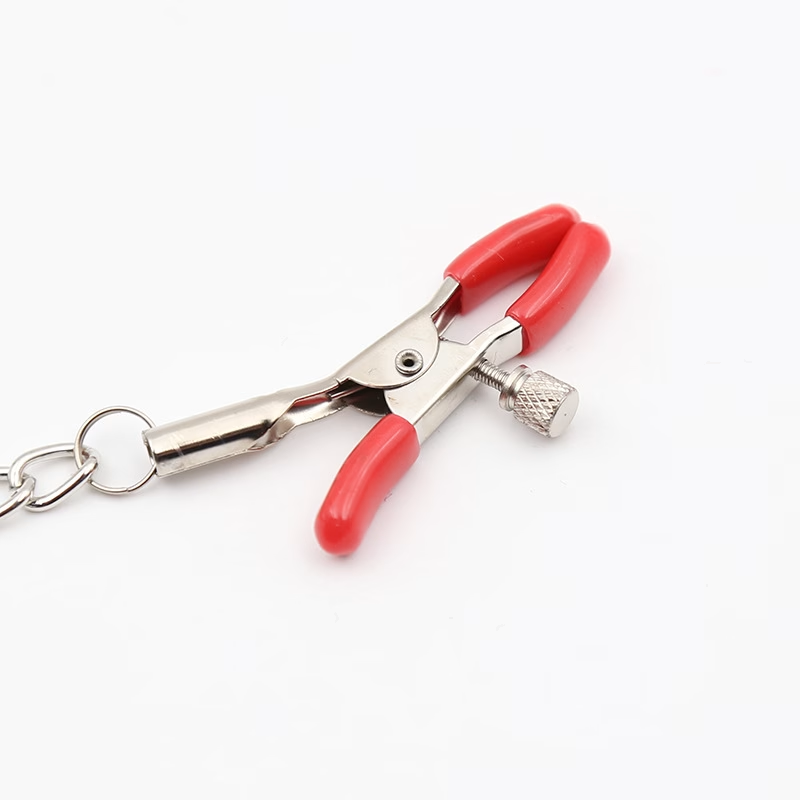
Whether it’s bondage ropes, nipple clamps, candles or whips: Everything can be fun – or hurt if it goes wrong. Have safety scissors ready, keep water to hand for wax play and only use suitable, body-safe materials (spoiler: ropes from the DIY store are usually not a good idea).
6. nerves, blood and pressure: bondage knowledge for beginners:inside
Bondage looks sexy – but poorly placed ropes can pinch nerves, stop the blood supply or even cause long-term damage.
The golden rule: Never tie directly on joints or in the hollow of the knee and check regularly: Is the area below the restraint still warm, supplied with blood and mobile?
Arm restraints above the head are particularly risky – blood circulation can be dangerously restricted after just a few minutes.
7. breath control: not for beginners
Choking, breath reduction or hand-on-neck games sound tempting to many – but they involve serious risks: Unconsciousness, panic and even brain damage.
Tip for safe play: Simulate control over the breath (e.g. by applying pressure to the side of the neck, not on the windpipe), but always allow the air to flow freely. And: Only try it out with a great deal of confidence and previous experience!
8. after the orgasm is before the breakdown: take aftercare seriously
After an intense session, there can be an emotional “aftershock”. Subs in particular sometimes experience a sub drop – a kind of emotional hangover with exhaustion, tears or feelings of insecurity. Plan aftercare: cuddling, quiet words, water, a blanket – whatever feels good. And check again the next day: How are you feeling now?
9. psychological triggers? Discuss beforehand!
Many BDSM practices can unexpectedly open up old wounds – especially if humiliation, loss of control or certain role models are involved. Clarify in advance whether there are any taboo topics or triggers. And agree on a code word that doesn’t just mean “stop”, but also specifically signals: “This is going into an emotionally difficult area, please be more careful.”
10. timing is king
Sounds banal, but it’s crucial: never start bondage games or long role-playing games when you’re already tired, hungry or stressed. Painful stimuli also often feel more intense under these conditions (not in a good way!). Good sessions need concentration, presence and time – so it’s better to postpone than to rush.
Reflection questions for your BDSM play
Here you will find questions that can help you to make your BDSM play SSC-compliant. Use them for preparation – or for reflection afterwards:
Safety
Have we informed ourselves sufficiently about the risks of our practices?
Do we have a plan for emergencies – e.g. first aid kit, safety scissors, cell phone at hand?
Are we familiar enough with the technology or toys? Or would a slow start make more sense?
Is the practice physically safe, but perhaps mentally challenging? What do we need to handle it well?
Common sense
- Are we both clear-headed – sober, focused and emotionally stable?
- Can we tell fantasy and reality apart?
- Do we have realistic expectations and talk openly about boundaries?
- Where could we get (more) information?
Consensuality
- Did everyone involved agree voluntarily – without pressure or influence?
- Do we know each other’s preferences and boundaries – and do we respect them in the game?
- Have we agreed on a safeword or emergency signal?
- Do we really have the same ideas about what happens today?
Conclusion: BDSM is not a free ride – but responsibility at eye level
BDSM can be exciting, pleasurable and deeply connecting – but only if everyone involved feels safe, taken seriously and respected. The principles of safe, sane and consensual are not a brake on fun, but the basis for intense play without nasty surprises. Those who inform, communicate and prepare create a space in which pain can mean pleasure – without risking real injury. In short:
Pleasure with responsibility is the real kick.
- PRICK- Personal Responsibility, Informed, Consensual Kink